
Journey Back in Time: How the Alaska Railroad Forged Anchorage’s Beginnings
How an untamed wilderness became a frontier town

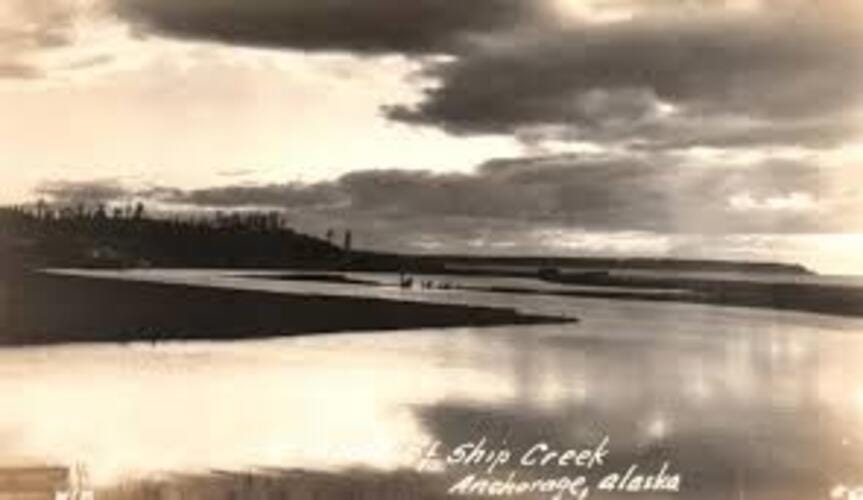
Pictured above is the mouth of Ship Creek (what would become Anchorage, Alaska) circa 1915.
In 1914, the United States Needed Coal
So the U.S. Congress passed the Alaska Railroad Act to connect the interior coal fields of the territory of Alaska to the Alaska coast.
The mouth of Ship Creek was chosen to be the headquarters of the Alaska Railroad because of its strategic, ice-free deep waters and because it was close to the coal deposits in the Matanuska Valley.
In early 1915, after the Alaska Engineering Commission (AEC) was established, the U.S. government began advertising in the Pacific Northwest to recruit workers to build the 35 million dollar railroad from Seward to Fairbanks.
Heading North
Later in 1915, more than 2,000 prospective workers and merchants began leaving on steamships, including the Mariposa from San Francisco, Portland, and Seattle, destined for the mouth of Ship Creek in the territory of Alaska. The ocean voyage could take weeks, depending on the steamship and ocean conditions.
Nothing but Wilderness
As steamships arrived in Cook Inlet, dramatic tides and shallow mud flats made it difficult for passengers to depart. So, passengers and freight had to be loaded from the steamers onto small boats called “lighters” and barges that took them as close to shore as possible.
Yes, You Can Share This Edition
And when you do, your friends and family will be so happy that they will send you on an all-expense-paid, round-the-world cruise, once a year for life… well, it could happen.
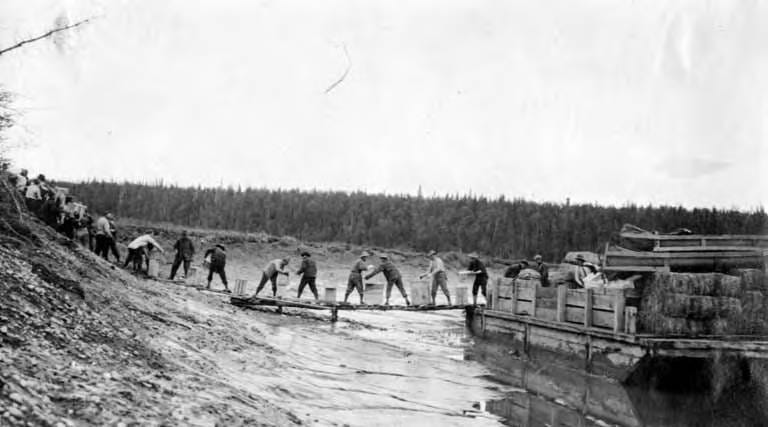
Getting to shore was tricky because of the mud flats. Long wooden boards were used as gang planks for unloading freight and for passengers getting off the small boats and barges.
Once ashore, workers and merchants were greeted by the natural landscape of wilderness and a handful of early homesteaders.
It wasn’t Much, but it Was Home
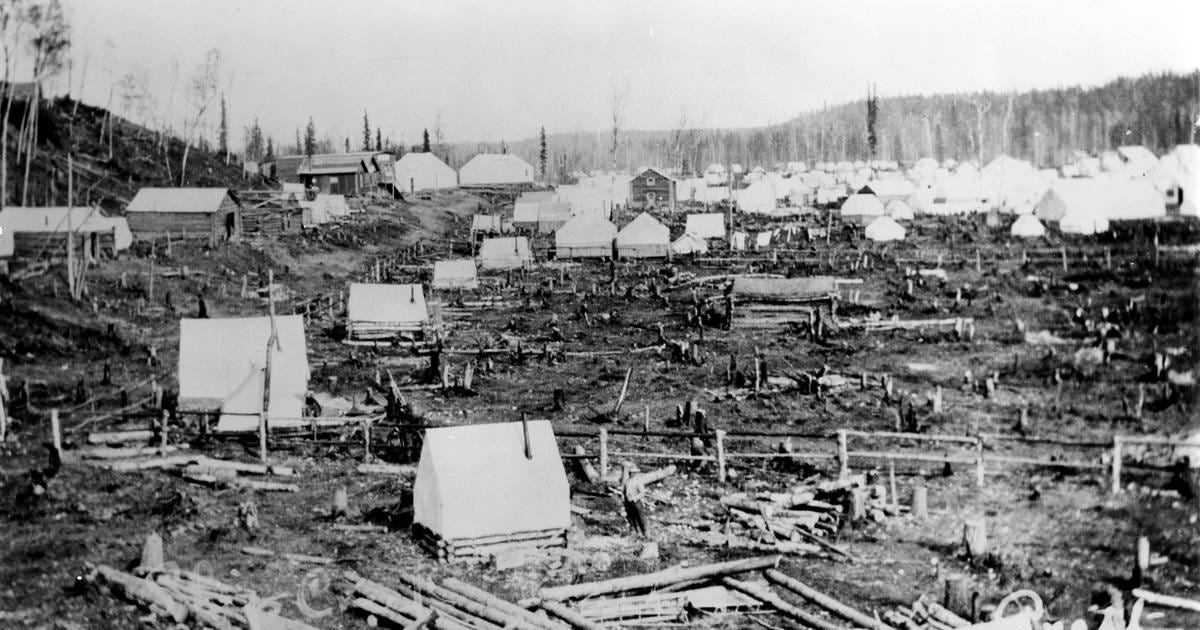
Workers quickly began clearing the dense wilderness and setting up basic canvas tents or makeshift shelters using lumber, scrap wood, and sod.
Some scavenged for material to build shanties and cabins with canvas roofs.
Even though the muddy area around Ship Creek was a jumbled and unsanitary mess, it was the humble beginning of what would become Anchorage, Alaska.
“North Addition”
Because the Alaska Engineering Commission needed the flatland around the creek to build permanent railroad yards and facilities, the settlement was relocated to the higher bluffs to the north, overlooking Ship Creek. That area became known as the North Addition.
Later, the Federal government built a row of cottages on the top of the North Addition bluff for its permanent employees. Because of that, the area became known as Government Hill, which later on became the first neighborhood in Anchorage.
BONUS
Take a look at the Government Hill Story and discover
Hey, We’re a Town, and We Need a Name
As the population grew, the new town required a name.
Those living in the tents had already begun calling it by names like “Ship Creek”.
But the town required an official name, so they had everyone vote for their favorite.
Possible names included:
Alaska City
Gateway
Ship Creek
Lane (after the U.S. Secretary of the Interior from 1913 to 1920, Franklin K. Lane)
Matanuska
Winalaska
Homestead
Terminal
Gateway
***The winner was Alaska City, with Lane a close second.
Did You Know?
Shortly after the vote, the United States Post Office had another idea.
They decided that because of all the barges and boats “anchored” in Cook Inlet, the name for the new town would be “Anchorage.”
From Our North Stars (that’s you)

From our “Wheels of Fortune: The Gold Rush Bicycle Story” edition.
Edie was surprised:
“I really enjoyed this surprising story. I'd never heard anything about using bicycles to get to the gold fields. Thanks.
Anchorage Memories.com
Take a look at this treasure chest of Anchorage Memories and enjoy.
Connect with Mike and Mary Jane

The people who came to the shores of Cook Inlet and the mouth of Ship Creek were a hearty group… and we complain when it takes “too long” for our fast food order.
Do you have a comment?
Until next time
Mike and Mary Jane
Alaska Stories
My aunt Peggy and uncle John lived in Seward. John Ostrom worked on the railroad. My cousins, Donald Ostrom and his little sister, were born there in 1931 for Donald and 1934 for Peggy June. They are still very active, and Peggy June finally quit running marathons at 88. They visited there last year. I am 2 months older than Don.
Don lives in Washington, and Peggy June lives in Delaware.