
Did You Live in an Igloo?
That's a question every Alaskan gets asked

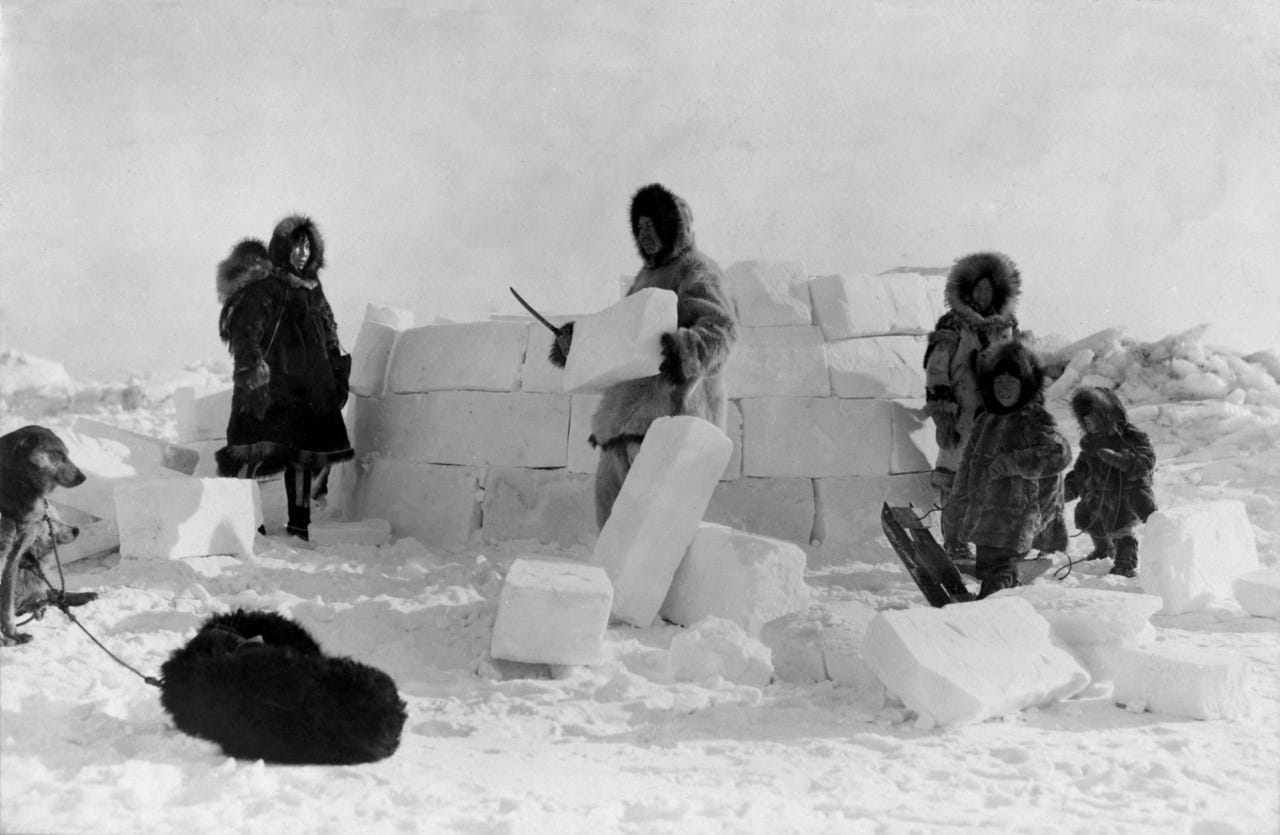
1924 photo above by Frank E. Kleinschmidt
I remember the first time I was asked if our family lived in an igloo.
We were visiting relatives in Texas. I was about 15 years old, and when a family friend found out that I was from Alaska, they asked if we lived in an igloo.
At first, I thought they were kidding me. But they were serious.
All About the Igloo
The word igloo comes from the Inuit word “iglv”, meaning house.
In Alaska, igloos were first used around 500AD.
While some think of igloos as permanent housing for Alaska’s native population, igloos were used as temporary housing for winter survival.
The Craft of Building an Igloo
An Alaska native skilled in the art of creating igloos can construct one in about 1 to 2 hours.
Most igloos are created as dome-shaped structures. The art of crafting a dome-shaped igloo out of compacted snow takes a lot of knowledge.
It all starts with a snow drift of fine-grained, compacted snow. The builders cut the drift into blocks, using metal knives. Originally, a bone knife was used as the cutting tool.
The blocks are stacked together in a way that creates a dome-shaped structure.
A small entrance to the igloo could be slanted downward and covered inside the entrance with seal skin to prevent cold wind from blowing into the structure.
Swankier igloos might even include a block of ice that acted like a window.
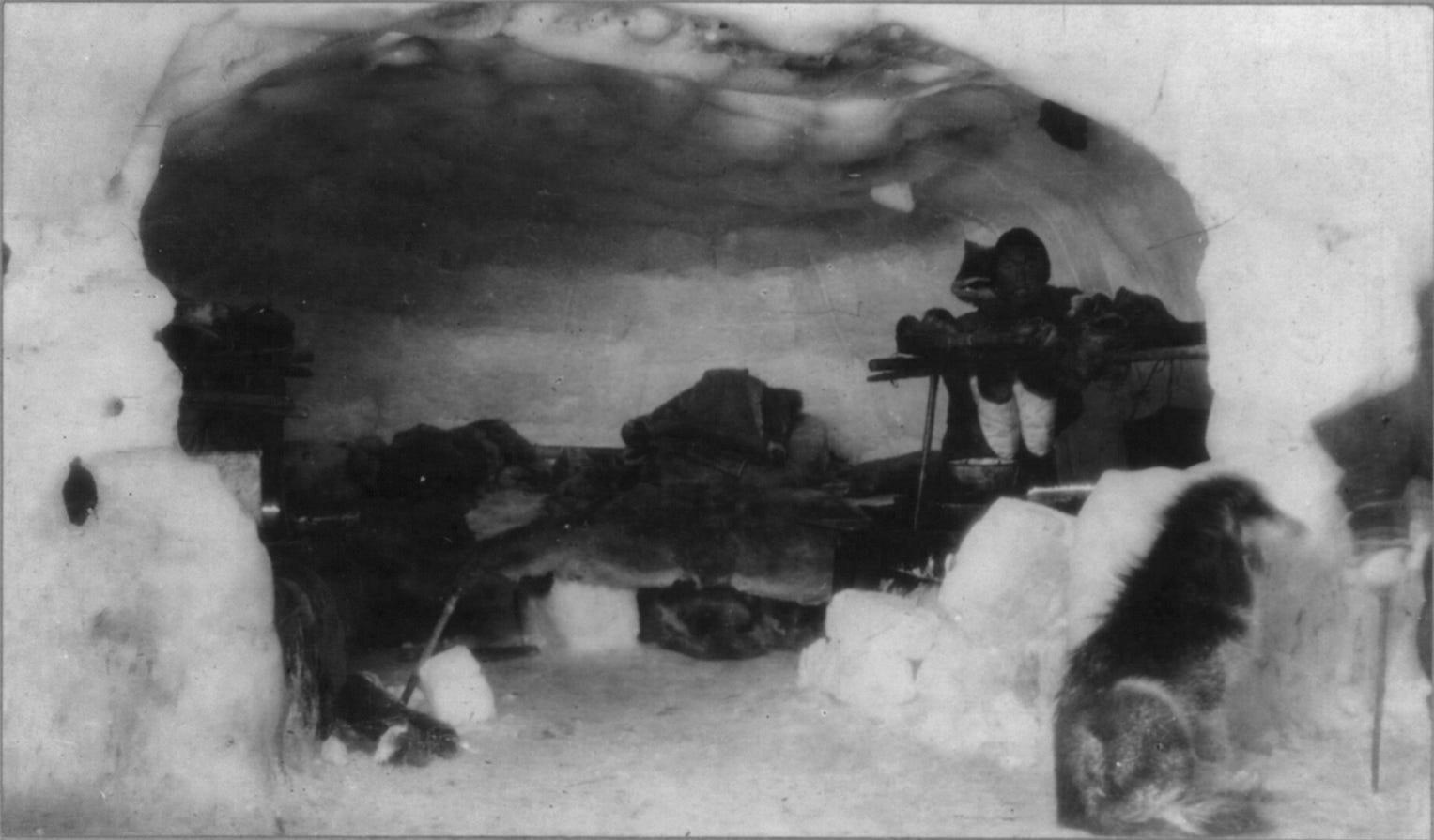
The interior of an igloo.
Yes, You Can Share this Edition
And when you do, your friends and family will be so happy that they will build you a really nifty, four-story igloo complete with its own ice skating rink and walk-in freezer… well, it could happen.
A Refuge from the Cold
While it was bitter cold outside, say 49 degrees below zero or more, the inside temperature of an igloo was remarkably warm.
Temperatures inside can range from 19 degrees to as warm as 61 degrees as a result of body heat alone.
Behold the Igloo
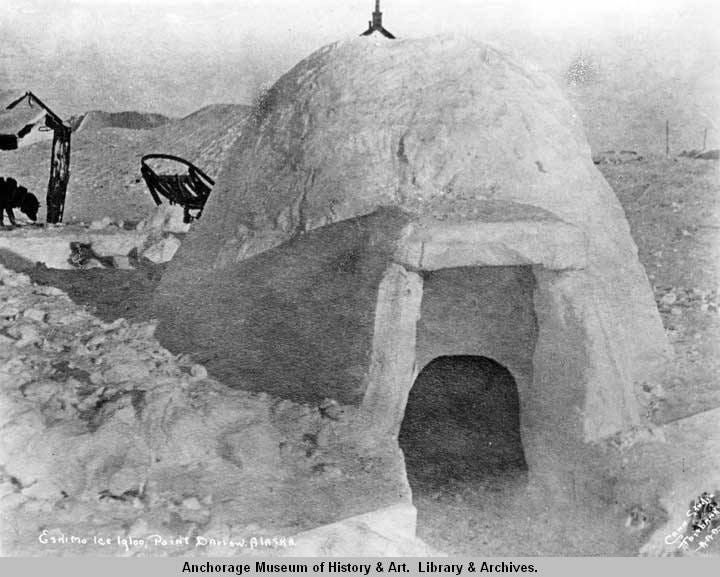
A completed igloo in Point Barrow, Alaska.
Mary’s Igloo
For the record, Mary of Alaska Stories is 1/4 Alaskan Indian, but she has never been inside an igloo.
This story of Mary’s Igloo is about a very tiny village near Nome, Alaska.
In the early 1900s, a small settlement was given the name, Mary’s Igloo, after an Inupiag woman who liked to welcome trappers, miners, and others into her home for a cup of coffee.
Mary’s Igloo became a transfer point for supplies headed for the gold fields.
By 1910, this tiny community was home to around 141 people. There was a post office, a store, and schools.
However, by 1952, all but a few people who lived in Mary’s Igloo had moved to Nome or Teller, Alaska.
Today, Mary’s Igloo is no more.
Have You Ever Been Inside an Igloo or Built Your Own?
BONUS
Would you like to know more about igloos?
Take a look at Igloos and discover.
Connect with Mike and Mary

So now that you know all about igloos, you can head outside in the winter and build your own. You’ll be the talk of the neighborhood.
Do you have a comment?
You can also reply to this email.
Or, you can Contact Us right here.
Until Next Time
Mike and Mary
Alaska Stories
When I was in the Alaska King of the Bands (A Burgundy Rose) in 1968-69, we went to a National Battle of the Bands in North Carolina... Came in 5th!
We were all called "Alaska", and were asked if we lived in igloos.
We said yes we did, and we had to run an extension cord up from Seattle so we could practice at the Governor's Igloo Mansion!!!
Every Alaskan I know has been asked that question. Even into the mid-70s. We briefly relocated to Casa Grande, AZ (as in a grand total of 3 days). The day I registered for high school, I was asked that question in every class. After school let out for the day, my father picked me up, took me to the principal's office and withdrew me from school. I, personally, was staggered by the idea each class room entered/exited onto a covered walkway. Far different from East High.